

Getting to Trieste
By train, plane or car - Trieste is easy to reach and even easier to live in. A car is not indispensable.
Train
I Frecciarossa connect the main Italian cities directly to Trieste Centrale. Once at the station, many affiliated facilities are less than a five-minute walk away.
On the morning of the race a shuttle S1 departs directly from the station to the start line of most races. After the race, a shuttle service takes competitors back to the Central Station.
The car is not neededall with direct connections. Remember to book the S1 shuttle from your registration page.
Regional trains
The Bora Village is a little over a kilometre from Sistiana-Visogliano station, which sits up on the Karst plateau and has very few trains at weekends.
By train from Italy
From Milan, Vicenza and Padua the Frecciarossa reaches Trieste Centrale with no changes: it leaves Milan at 07:45 and you are in the city just after midday.
From Bologna and Florence, Italo and InterCity trains run direct to Trieste in the afternoon, and from Turin you change at Milan.
On Sunday the 17:05 train takes you back to Padua, Vicenza and Milan.
By train to Trieste from Italy: times, packages and pricesBy train from Austria and Germany
From Vienna, Graz and Klagenfurt the ÖBB railjet reaches Trieste Centrale with no changes, every day, and it also stops at Monfalcone and Trieste Airport.
From Villach the Mi.Co.Tra carries on to Trieste on Saturdays, Sundays and public holidays, at € 17, with bikes and dogs on board.
From Germany the Nightjet takes you to Udine, and from there it is just one more train.
Getting to Trieste by train from Austria and Germany: times and faresPlane
Trieste Airport - 20 km
The shuttle G51 arrivals leads directly into the centre of Sistiana, 300 metres from the Bora Village. Alternatively, the airport railway station connects Trieste Centrale with regional trains. If you prefer to stay in Trieste, stay on board the bus: it goes all the way to Trieste Central Station. No change, no car hire.
Ljubljana - Treviso - Venice
We recommend the shuttle GoOptiat prices around €20 connects these airports directly to Trieste. Don't wait until the last moment to book.
GoOpti.comAutomobile
Take the A4 motorway exit “Sistiana”, turn right, at the first crossroads straight ahead and then left towards the Bay of Sistiana and PortoPiccolo. In five minutes you are there. S1 signs at all intersections.
In 2027 parking is managed across the whole area: more than 2,000 spaces at PortoPiccolo, Parco Caravella, the bay and the outlying areas, and the spaces nearest the finish are booked from your Runner Profile, after you enter the race. If you come by car, you can stay overnight in central Trieste or close to the finish.
Parking 2027: prices, checkpoints and opening times
A service shuttle S1 connects start, finish, Trieste and return in both directions. Check the shuttle timetables on your race page.
Distances to major cities
Trieste: running, culture, nature
The ideal destination for winter trail running
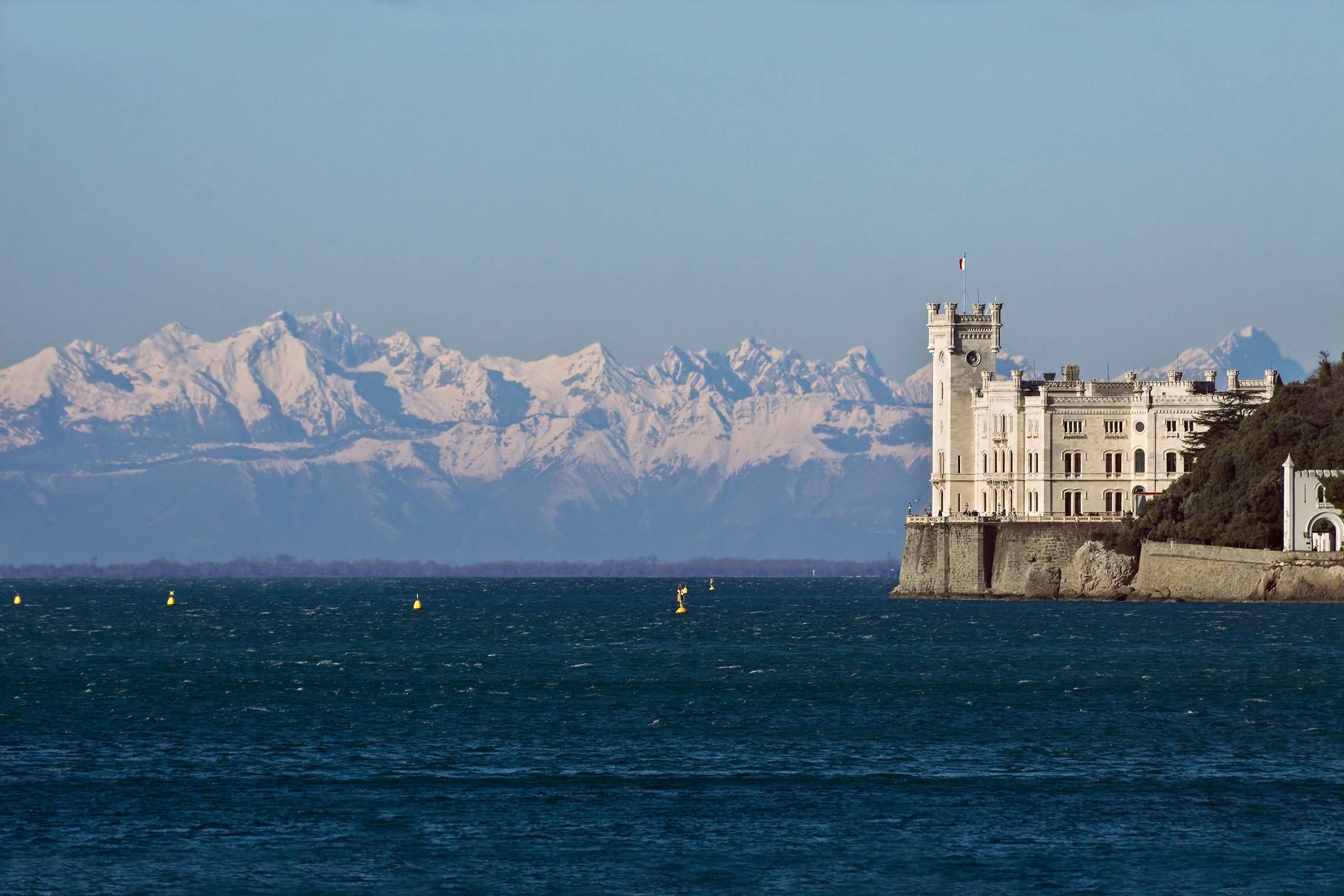
Trieste is unique: mild climate by the sea and snow-capped mountains in the background. A perfect combination of wilderness and the comfort of a Central European city, with all the services and conveniences of a capital city. You literally go from the mountains to the seashore.
The routes range from the rocky coastline to the forest paths of the Karst, making the trail running experience varied and unforgettable. At the refreshment points of La Corsa della Bora you will find typical local products, strictly zero kilometre.
Whether you are looking for a competitive challenge with technical stretches and fast distances, or a winter break with more relaxed times and scenery to enjoy without pressure - La Corsa della Bora offers both. The Gulf of Trieste is the ideal destination for winter trail running, and La Corsa della Bora is the event not to be missed.
How can I get to Trieste to participate in the trail running race?
Trieste is easily accessible by train, plane or car, with direct connections and shuttle services such as the S1 shuttle from the station or airports, making private car use unnecessary.
What are the main transport options for getting to Trieste?
The main options are train, with Frecciarossa services and shuttles from the station; air, with Trieste Airport and operators such as GoOpti from Ljubljana, Treviso and Venice; and car, with more than 2,000 spaces in bookable car parks and free areas, plus the S1 shuttles.
What are the main distances between Trieste and other Italian and European cities?
From Trieste, Venice is about 100 km away, Bologna 300 km, Innsbruck 380 km, Milan and Florence 420 km, Vienna 480 km, Budapest 530 km and Frankfurt about 830 km, while by train travel times vary from 1 hour 30 minutes to about 10 hours.
What characteristics make Trieste an ideal destination for winter trail running?
Trieste offers a mild climate by the sea and snow-capped mountains in the background, with varied routes from the coast to the Karst trails, and a combination of wild nature and the comfort of a Central European city, ideal for all levels of runners.
What services and features does La Corsa della Bora in Trieste offer?
La Corsa della Bora offers a trail running experience with varied landscapes, local zero-kilometre products on refreshments, technical or relaxed routes, and an excellent atmosphere in an environment that combines nature, culture and modernity.