


Course marking
How S1 races are marked
Tape, pink sardines, arrows and signs: what they mean, what we mark them with and why they fade away on their own.
All our races are marked on the ground: if one is an exception, its own page says so and so do the rules. The markings you find along the course are what you follow — the GPX track is there to confirm them, not to replace them. Below you’ll find every type of marking, with a photo of how it really looks out on the trail.
The markers
What to look for along the course
Nine markings, the same ones in every S1 race. If you haven’t seen one for a while, stop: it almost always means you’ve missed a turn.
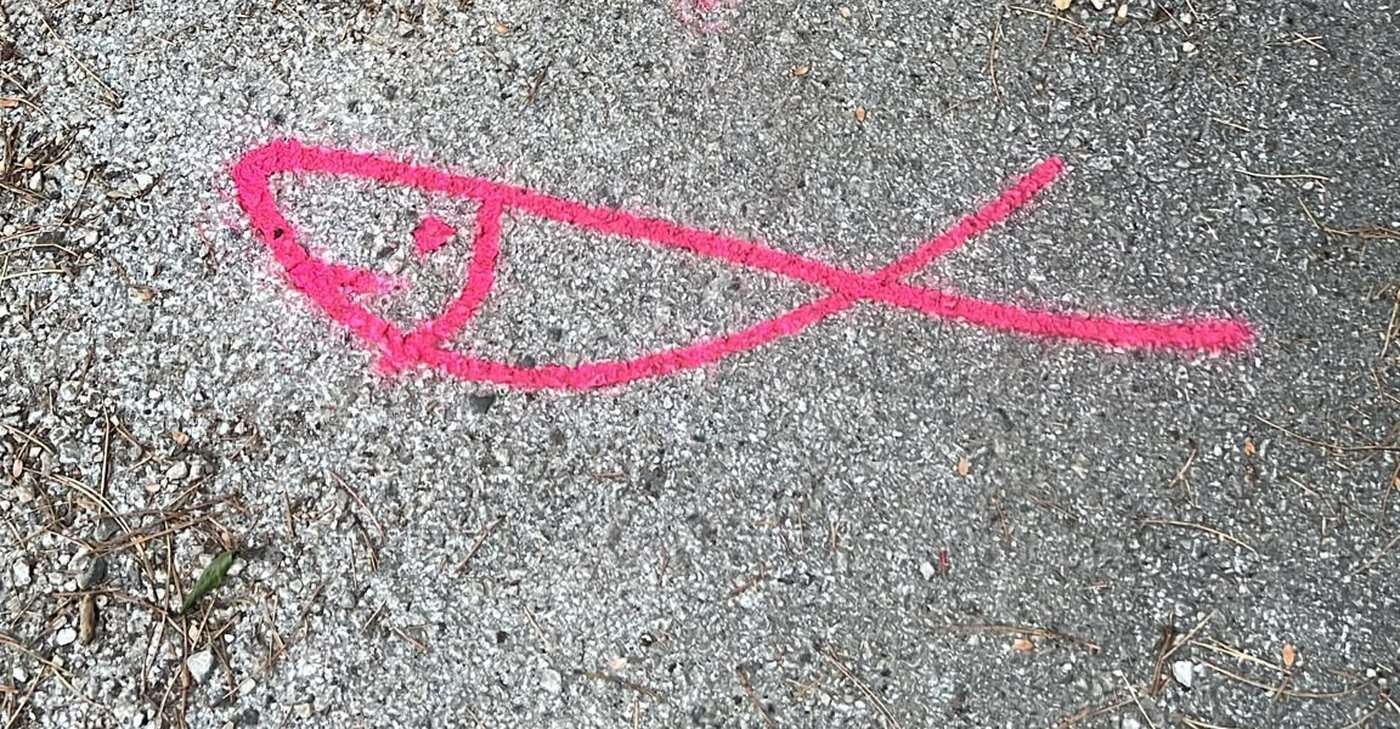
The Sardella
The pink fish drawn on the ground is the Sardon Run signature: where there’s a sardine, you’re on the right course. The direction comes from the arrow that almost always goes with it — the sardine confirms, it doesn’t point.

Tape
Yellow, pink or red: the colours don’t mean different things. What counts is the S1 logo printed on it, which sets our tape apart from all the other tape you find in the woods.

Bulletin
A pink dot on the ground confirms you’re going the right way. It turns up on long stretches with no junctions, where all you need is reassurance.

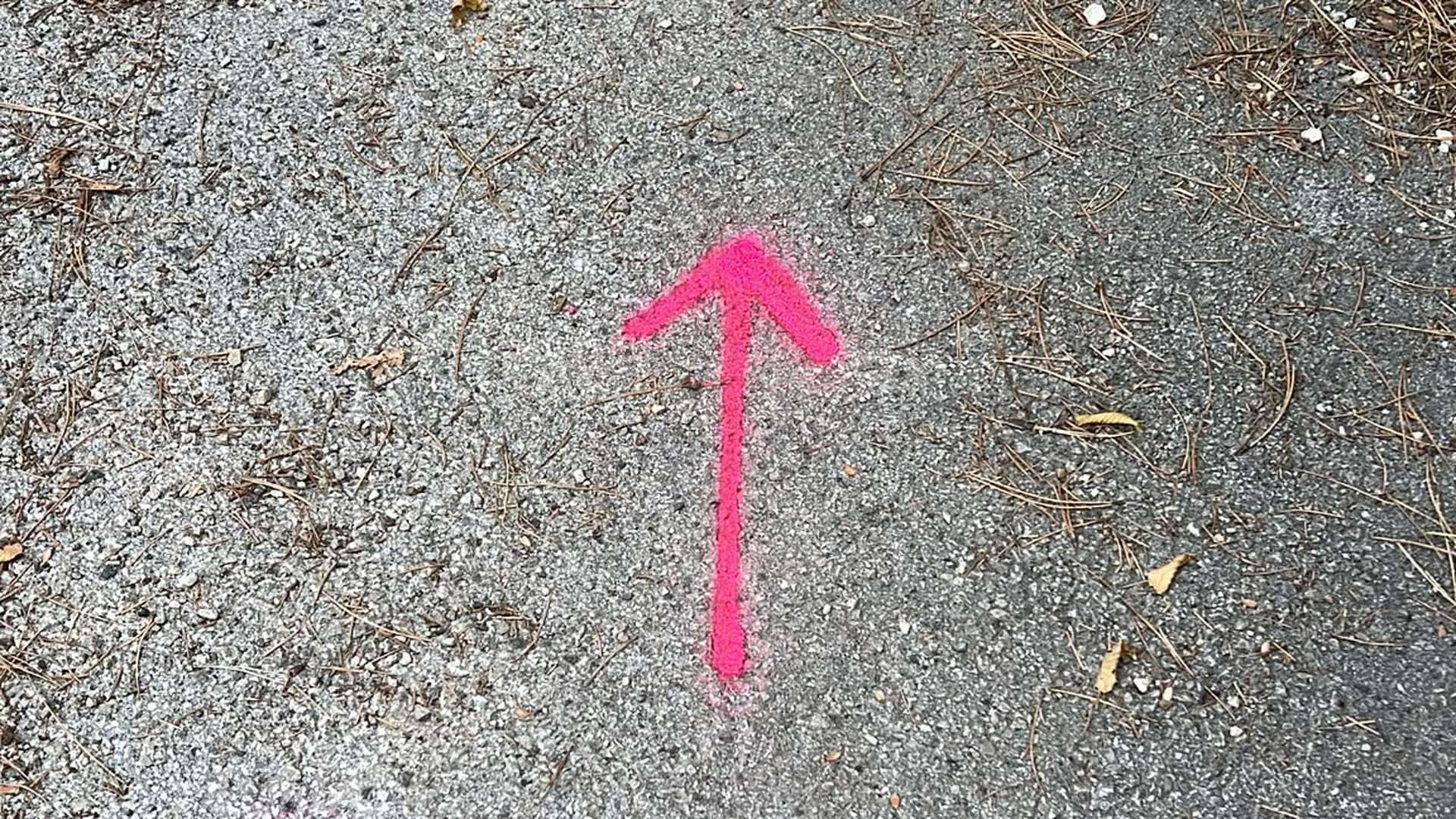
Straight arrow
Carry on the way the tip points. It’s the marking you’ll see most often.

Turn arrow
A tilted arrow warns of a change of direction just ahead: look up and find the next marking before you go charging off downhill.

X — wrong way
You’re off course. Go back to the last marking you saw and start again from there.

Reflectors
On the sections run at night the tape carries reflective dots: they catch your head torch beam, so when you’re unsure sweep your head around instead of searching the ground.

Arrow sign
At the big junctions the direction is on a sign, easier to spot than a mark on the ground.

Roadbook at the refreshment point
At every refreshment point a sign sets out the section ahead: kilometres, climb, next water point. Read it and stock up before you set off again, not after.

Race sign
Where the courses split, the sign carries the name of your race. If yours isn’t on the board, that’s not your route.
The spray
The pink you see on the ground is chalk, and it goes away on its own
Arrows, dots and sardines are drawn with SOPPEC Tempo Marker, a spray can for temporary chalk-based markings a base di gesso, with pigments chosen to break down fast under ultraviolet light. It’s not paint: the sun fades it, the rain dissolves it, and nobody has to come back and scrape anything off.
The product contains no substances classified as CMR (carcinogenic, mutagenic or toxic for reproduction), no CFCs, no chlorinated solvents, no lead and no cadmium; the manufacturer’s safety data sheets are public and drawn up under the European REACH regulation. Once dry it poses no risk to wildlife or to grazing livestock if occasionally swallowed.
15–30 days
How long a mark on the ground normally lasts. On shaded stretches, with no rain, it holds for up to two months.
Only on the ground
Never on walls, rocks, signs or over existing hiking waymarks. No permanent paint.
Reused tape
S1-branded, put out before the race and taken in afterwards, so it goes back into the crates ready for the next edition.
Prima e dopo
We take everything down, and we pick up what isn’t ours as well
The markings go out in the days before the race and come in once the last competitor has passed: tape, signs, barriers, boards. Putting them out and taking them in is the job of volunteer teams, with the course split into sectors, and the sweep service closes the line.
On the same pass we pick up the litter we find along the course, including what we didn’t leave ourselves. It has always been this way: we come off the trails leaving them cleaner than we found them. We ask the same of competitors — litter is left at the refreshment points, where the bins are, and dropping it along the course costs a 60-minute penalty.

Lost the markings? Stop and retrace your steps to the last one you remember: it’s almost always quicker than trying to cut back onto the route. If you find a stretch with no markings, or a length of tape still out there after the race, let us know — we’ll go and sort it.
If a mark on the ground bothers you outside your house or on a road you use, let us know where: we know it disappears on its own within a few weeks, but we’d rather know about it.